
Sentimental Value
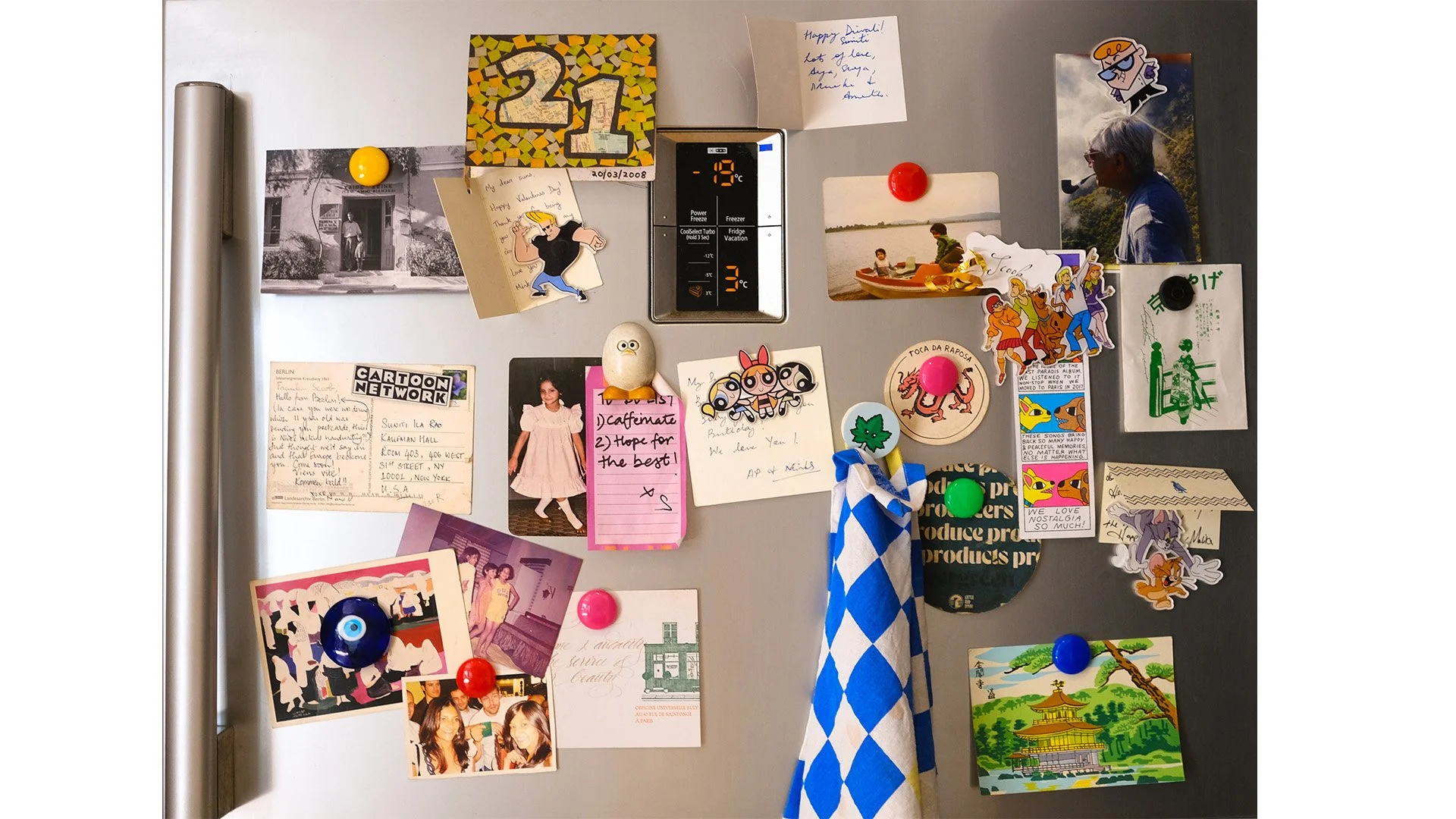
Image: Frozen In Time, 2026
Time is a flat circle, wrote 19th century philosopher Friedrich Nietzsche. Humans are doomed to live the same lives over and over, stuck in an infinite carousel of repetition. It can certainly feel that way—especially when history insists on repeating itself, in both the micro and macrosphere. Did I break a New Year’s resolution before mid-January again? Did the USA invade an oil-rich country again??
But nihilistic as it sounds, Nietzsche intended the expression as a cause for celebration. He wanted us to aspire to a higher state of being, knowing every moment would return forever. He hoped we could overcome pessimism by affirming life because of its tragic limits. What if these wearisome patterns keep showing up on our doorsteps as an opportunity to change?
And what better era to operate in true context than now, when time is literally a flat circle—when all of human history exists in orbit around us, accessible at the touch of a fingertip?
We recently watched Sentimental Value, the latest offeringfrom Danish-Norwegian writer-director Joachim Trier. It’s not often something so quiet rises to the top of an awards-season movie watch-list. The key to success in our attention economy seems to lie in embracing grandiosity (and aggressive marketing gimmicks). You end up shouting so loud you almost start to believe your own hype. But to hear the whisperings of time gone by requires restraint—rather than stomping over silences that mean everything. As one of our other perennial favourites, director Paul Thomas Anderson recently wrote in Variety: “If you want to see the real best special effect of the year, it’s Inga Ibsdotter Lilleaas’ performance (in Sentimental Value).”
The film’s deceptively simple plot line, in which a family home remains the seemingly sentient constant, lets an intergenerational drama play out through ripples of history. Like the world itself—our shared home—the house becomes a container for all that came before, a place where the past is indelibly imprinted in its walls, the sofas, in the lingering anger and sadness. What’s come and gone, and its consequences, exists with us, affects us—whether we choose to see it or not. As we witnessed the film’s characters sift through layers of fragmented memory, it became clear how much their identities had been shaped by this interconnected timeline. Trier’s bittersweet tapestry about that which gets passed down from parents to offspring is subtle––until it hits you like a cascading ton of bricks.
Cuddled up on the sofa with our mother, equally riveted (she sleeps through most stuff), made this watch extra sentimental. It brought up exactly the river of emotions Trier seems to want us to wade in whilst evading blame and tidy conclusions. It set us up for an unpacking of parallels within our own shared space. How as parents, children, siblings—individuals connected by structures greater than ourselves—we coexist within the same architecture, yet bring to it entirely different timelines and personalities, and take away unique lived experiences.
It gave us an unexpected opportunity to question how we choose to communicate with and treat each other, in light of our mutual context.
It seemed to whisper: you are standing on the shoulders of ghosts and giants. Finding your place within this sacred scaffolding is an honour as much as it is an act of humility.
In a moment of seemingly irreconcilable difference and division, Sentimental Value is a soulful antidote. When asked, Trier commented on the emotional clarity it offers: “A lot of people are making films that are very tough and quite nihilistic, and I understand that answer to the times we live in. I also understand aggression and being pissed off and yelling back at systems that don’t work. But I’m trying to take another road because that’s just my personal way of expressing myself, which is more gentle and hopeful.” With Valentine’s Day around the corner, we echo his sincere declaration that "tenderness is the new punk.”
CURRENT FAVES
Here are three loveable works we’ve been shipping lately.
WATCH Sentimental Value as it makes its way to a theatre or streamer near you. And if you haven’t yet had the pleasure, Trier’s The Worst Person In The World—also starring the endearing Renate Reinsve—is available on Mubi and Amazon Prime Video.
LISTEN to the Solved podcast, and its inaugural episode on Values. Mark Manson, NYTimes bestselling author of The Subtle Art of Not Giving a F*ck, goes deep into why your values are the foundation of everything—your happiness, your mental health, your relationships, your sense of meaning—and why so many of us today feel so lost. By the end, you just might consider this area of your life “solved.”
MAKE an extra effort to connect with other people. Dr. Robert J. Waldinger, Director of the Harvard Study of Adult Development, cites his research here that people who do are happier, live longer and stay healthier. Texting counts.
And lastly, here’s some GOOD NEWS to start the month on a positive note: Step behind the scenes of Louis Vuitton’s Spring-Summer 2026 show by Pharrell with architect Bijoy Jain, the creative mind of Studio Mumbai, for an exclusive look at the making of the custom set. Pharell notes that there are few artists’ works that teach you something new when you zoom out as much as when you zoom in, calling it the ultimate demonstration of refinement.
Go lightly x
